
Live-In Companion or Live-In Carer: What Does My Elderly Parent Actually Need?
If you’re starting to worry about an elderly parent living alone, one of the first questions that may come up is:
Does Mum or Dad need a live-in carer — or would a live-in companion be enough?
It’s an important distinction.
For many families, their parent is still independent. They can wash, dress, prepare food and manage most of their normal routine. But perhaps the house feels a little too quiet. They may feel nervous at night, need some help with small everyday jobs, or simply benefit from having another person around.
In these situations, full-time professional care may not yet be necessary.
A live-in companion through home sharing can offer company, reassurance and practical support while allowing an older person to continue living independently in the home they know and love.
But home sharing is not a replacement for professional care when hands-on personal or medical support is needed.
So how do you know which option is right for your parent?
What Does a Live-In Companion Actually Do?
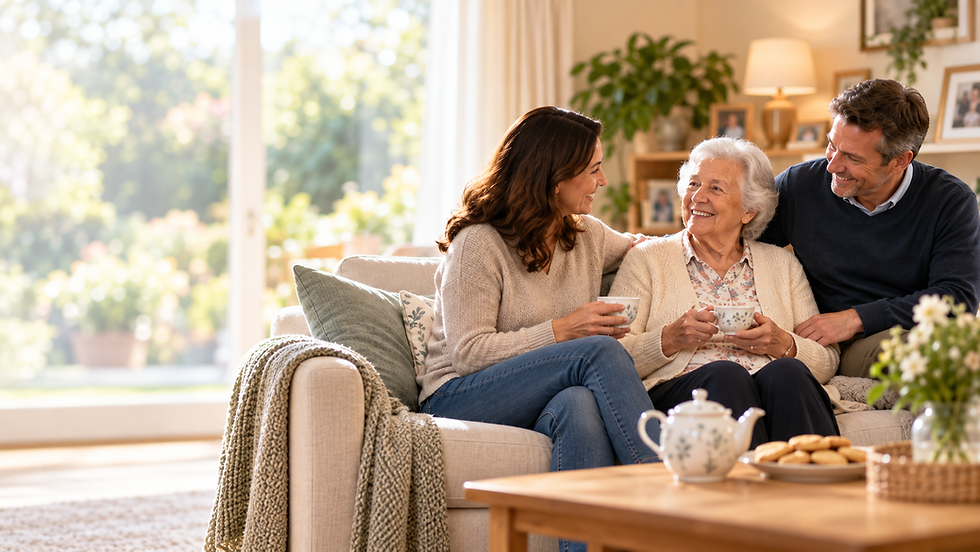
A home-share companion is a responsible person who lives in the older person’s home and becomes part of their everyday routine. A live-in companion for elderly people can provide regular company, reassurance and light practical support while helping them remain independent at home.
At Elder Home Share, companions are carefully matched with homeowners based not only on practical requirements, but also on personality and compatibility.
A companion can provide things such as:
Friendly company and conversation
A reassuring presence during evenings and overnight
Light household help such as hoovering or putting out the bins
Small shopping trips or errands
Preparing a simple snack
Spending some quality time together
Peace of mind simply by having another person in the house
For an older person who is still largely independent, these small things can make a very big difference.
Sometimes it is not that Mum or Dad needs someone looking after them.
They simply need someone around.
That can be especially reassuring for families who live in another part of Ireland, have busy work and family lives, or live abroad.
Elder Home Share describes its service as companionship, night-time reassurance and light practical support rather than personal care.
What Doesn't a Home-Share Companion Do?
This is probably the most important part for families to understand.
A home-share companion is not a professional carer.
Their role is companionship and everyday support — not medical or personal care.
A companion should not be expected to take responsibility for tasks such as:
Bathing or showering
Toileting
Dressing
Lifting or transferring someone
Administering medication
Providing nursing or medical care
Managing complex health conditions
Providing continuous supervision where this is medically required
If your parent requires this type of support, professional home care may need to be put in place.
That does not necessarily mean home sharing is no longer suitable.
In fact, the two can sometimes work alongside each other.
A professional carer may visit at specific times to help with personal care, while a home-share companion provides company, reassurance and a presence in the home during the evenings and overnight.
Elder Home Share itself makes this distinction clear: home sharing is not a personal care service, although it can complement other support already in place.
When Might My Parent Need Professional Care?
Every person and every family is different, but there are some signs that it may be time to speak with a professional care provider or healthcare professional.
For example, your parent may need additional care if they regularly require hands-on help with washing, dressing, toileting, mobility or medication.
The key question is:
Does my parent mainly need company and reassurance — or do they need someone to physically care for them?
If the answer is mainly company, presence and light practical support, home sharing may be worth exploring.
If the answer involves significant personal or medical care, professional care should form part of the support plan.
And for some families, the right answer is both.
When Is a Live-In Companion for Elderly Parents a Good Fit?
Home sharing can be particularly helpful for an older person who wants to remain at home and maintain their independence but would benefit from having another person in the house.
It may be a good option if your parent:
Lives alone
Has a spare bedroom
Is generally independent
Feels lonely or isolated
Feels nervous being alone at night
Would enjoy regular conversation and company
Could use a little help with household tasks
Has recently been bereaved
Has lost some confidence after a fall or other worrying experience
Wants to remain living in their own home for as long as possible
For many families, home sharing sits in that important space between living completely alone and needing full-time care.
Your parent keeps their routines, their home and their independence — but the house no longer feels quite so empty.
A Personal Approach Behind Elder Home Share
Elder Home Share was founded by Saoirse Sheridan in 2015, and the idea came from a very personal place.
Saoirse was inspired by the close relationship she had with her grandmother, while at the same time experiencing the difficulty of finding affordable accommodation herself as a mature student.
She realised that two very different problems could help solve one another: older people had spare rooms and often wanted more company and security, while responsible younger adults needed affordable places to live.
Importantly, Saoirse didn't just create the idea from a distance — she experienced home sharing herself.
She lived as a home-share companion with David Bell, who was 96 when they began sharing a home, giving her first-hand experience of the relationship from the companion's side as well as a deeper understanding of what older homeowners and their families need.
That personal experience helps explain the caring, relationship-focused approach that runs through Elder Home Share today. Matching two people is not simply about finding someone to fill a spare bedroom. It is about finding someone the homeowner can feel comfortable welcoming into their life.
And families often mention that personal support when describing their experience with the service.
"I’ve had a great experience with Elder Home Share. The process was smooth and well organised, and Saoirse was incredibly helpful and supportive throughout. I’m very happy with my match and would definitely recommend their service!"— Michelle N
For a family making a decision about an elderly parent, having someone who listens, understands the concerns involved and supports both sides of the match can be just as important as finding the companion themselves.
How Does Elder Home Share Work?
The process is designed to give the family and homeowner plenty of opportunity to decide whether a potential companion feels right.
1. Register with Elder Home Share
The family begins by completing the registration and onboarding process, providing information that helps Elder Home Share understand the homeowner, their situation and the type of companion who may suit them.
2. Review Companion Profiles
Suitable companion profiles are then shared with the family.
This allows you and your parent to consider potential matches rather than simply having someone assigned to the home.
3. Meet the Companions You Like
If there is someone you would like to meet, Elder Home Share connects both sides and provides guidance for the first meeting.
This is an opportunity to talk, ask questions and — importantly — see whether personalities click.
4. Reference Checks
Once a preferred companion has been selected, Elder Home Share carries out reference checks before the arrangement proceeds.
5. Start With a Trial Month
Every placement begins with a one-month trial period, giving both the homeowner and the companion time to make sure the arrangement feels right.
However, it is important to enter a home-share arrangement with genuine commitment. Companions are often giving up their existing accommodation in order to move into the home, and finding somewhere new to live can be difficult if the arrangement ends unexpectedly.
For that reason, we encourage families and homeowners to approach an Elder Home Share arrangement with an open mind, clear expectations and a real intention to make it work. The trial month is there to make sure the match is right, but the best home-share relationships begin when both sides enter the arrangement wholeheartedly.
How Much Does Elder Home Share Cost?
One reason families explore home sharing is that it can be considerably different financially from employing someone to provide full-time live-in care.
According to Elder Home Share's current Ireland fee structure, there is no onboarding fee.
For homeowners in areas where accommodation is in high demand, the Elder Home Share service is currently free to the homeowner. The companion pays Elder Home Share €250 per month, as well as a €50 household contribution directly to the homeowner.
In rural and lower-demand locations, the structure is reversed: the companion can use the service free of charge, while the family pays €250 per month to Elder Home Share for the duration of the match.
Because circumstances and locations differ, families should always check the current fees directly with Elder Home Share when enquiring.
Live-In Companion or Live-In Carer? A Simple Family Checklist
Still unsure which type of support your parent needs?
Go through these questions together:
Does Mum or Dad manage their own washing and dressing?If yes, a companion may be suitable. If they need regular physical assistance, professional care may be required.
Can they manage their medication independently?If medication requires professional administration or close management, speak with an appropriate healthcare or care provider.
Are they mainly lonely or nervous being alone?This is exactly where companionship and home sharing may be particularly valuable.
Would having someone sleeping in the house make them feel safer?A reassuring night-time presence is one of the main reasons families explore home sharing.
Do they need help with small everyday jobs rather than personal care?Light housework, small errands and companionship can fit naturally within a home-share arrangement.
Would they enjoy living with another person?Personality matters. Home sharing works best when the homeowner genuinely wants company and is comfortable sharing their home.
Do they need professional care as well?It doesn't always have to be one or the other. Professional care and home sharing can sometimes complement each other.
The Goal Is to Protect Independence — Not Take It Away
For many adult children, deciding how to support an ageing parent can feel overwhelming.
You want Mum or Dad to be safe.
But you also don't want to take away their independence before it is necessary.
A home-share companion can offer a gentle middle ground: someone in the home, someone to talk to, someone nearby at night and someone to lend a hand with the little things — while your parent continues living life on their own terms.
And if your parent's needs are more complex, recognising that professional care is required is equally important.
The right solution is ultimately the one that gives your parent the appropriate level of support while respecting their safety, dignity, independence and wishes.
If you're worried about an elderly parent living alone and wondering whether home sharing could be the right next step, Elder Home Share can help you explore the options and understand whether a live-in companion would suit your family's situation.
Sometimes, a little company can make a house feel like home again.


Comments